Walton, “Categories Of Art”
PHIL 150, Introduction to philosophy, Fall 2026
The view Walton rejects (–336)
- Disregard the origin of the work, the intention of the artist
- Pay attention only to what is sensible
- Aesthetic qualities of a work (e.g., “mystery”) independent of artists’ intention
The thesis (337)
- “(some) facts about the origins of works of art have an essential role in criticism”
- See further 336–337
Aesthetic and non-aesthetic properties (337–338)
- properties:
- aesthetic (broadly speaking: representational), emergent from:
- non-aesthetic
Standard/variable/contra-standard non-aesthetic properties (339–40)
- aesthetic properties emergent from standard non-aesthetic properties
- In painting:
- flatness and motionless: standard:
- particular shapes and colors: variable
- protruding object, electrical device, etc.: contra-standard
Perceiving a work in a category
- Works belong to (several) categories
- Categories have norms (=“standards”)
- Standards are relative to norms
How can a portrait resemble a person?
- Problem: See 344
- Solution: See 344–5; and 346–7
For next time
- Read 347–348, from “Imagine a society” to “seeing it as a rabbit”
- Question: Why would “Guernica” strike that society as “cold, stark, lifeless”?
- Picasso, Guernica (1937)
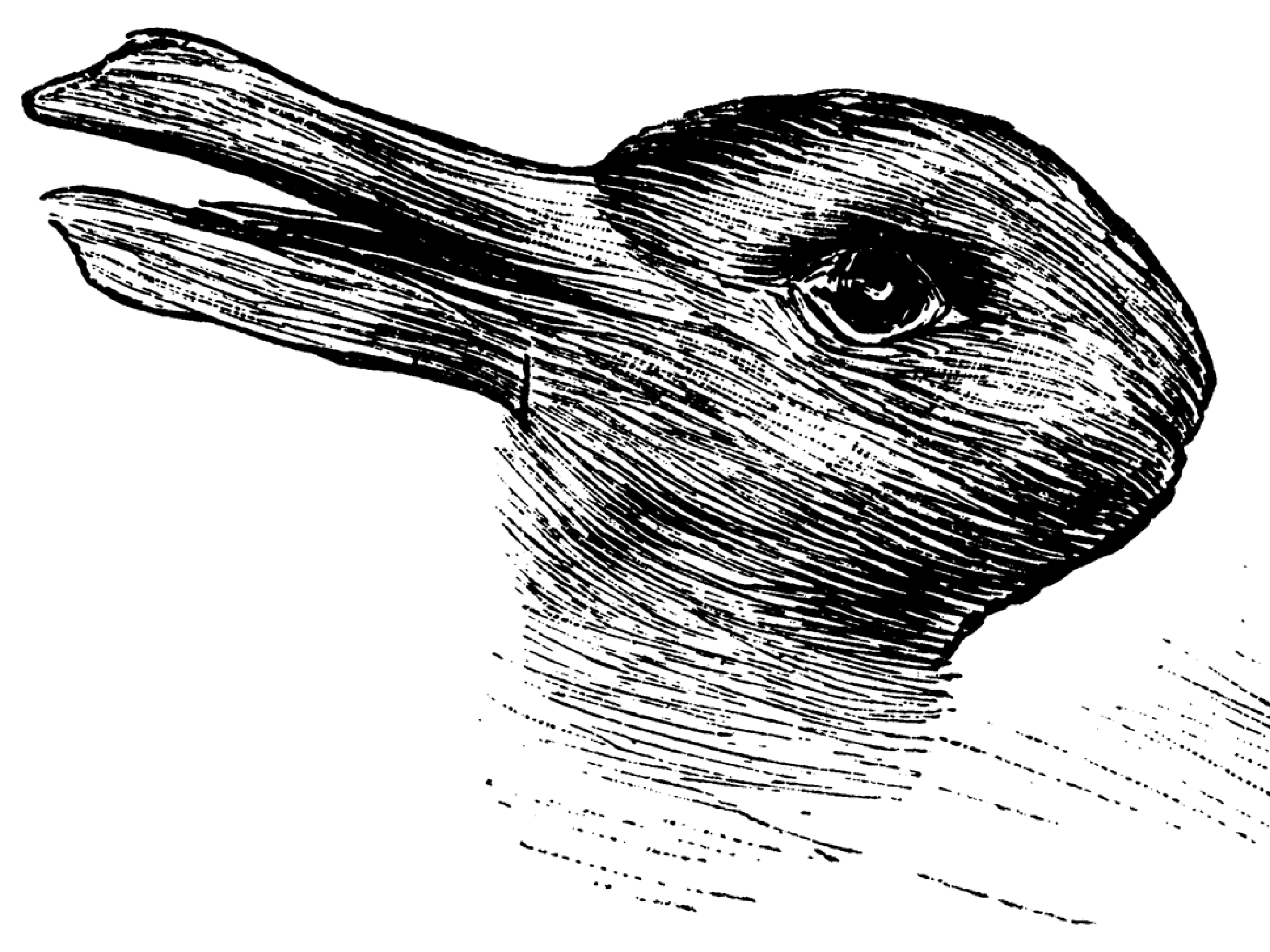
The duck-rabbit
- On Guernica, see p. 348.
- The duck-rabbit
- Lesson: perspective can be shifted at will
Truth in art
- Works of art belong to categories
- Understanding art involves understanding its category
The personal and the historical
- Relevance of artistic intention and genre
- Independent interest of artistic intention
Conclusions
- Against the intentional fallacy: 363–364
- Against the simplicity of aesthetic properties: 364–365
- Aesthetic perception as skill: 366